UK
UK US
US EU
EU AUD
AUD Global


Self-Checkout Kiosks: Are They Right for Your Business?
In today's fast-paced retail, hospitality, and service-driven environments, customer expectations are evolving faster than ever. Long queues at the checkout counter are no longer just a minor inconvenience—they are a primary driver of cart abandonment and lost revenue. As business owners look for innovative ways to streamline operations, enhance throughput, and reduce overheads, self-checkout kiosks have emerged as a game-changing technology.
At South West Systems, we specialize in equipping businesses with industry-leading hardware and software solutions, from advanced EPOS till systems and top-tier Avery label scales to fully integrated self-service kiosks. But are self-checkout kiosks the right fit for your specific business model? Let’s dive into the core considerations, benefits, and strategic integration techniques.
Understanding the Shift Toward Self-Service Technology
Consumer behavior has shifted dramatically over recent years. Modern shoppers increasingly value speed, autonomy, and control over their purchasing journey. By allowing customers to scan, pay, and bag their items independently, businesses can redefine the entire front-of-house experience.
Why Modern Consumers Prefer Kiosks
-
Speed and Efficiency: Customers who are in a rush can bypass traditional queues entirely.
-
Accuracy and Order Customization: Self-service touchscreens allow patrons to review their selections, double-check pricing, and make modifications without miscommunication.
-
Reduced Friction: Introverted shoppers or those with quick, straightforward purchases appreciate the seamless nature of automated checkouts.
Evaluating Your Business Model: Are Kiosks a Good Fit?
While self-checkout technology offers immense advantages, implementing them requires an honest assessment of your business operations, floor space, and customer demographic.
1. Retail Stores, Convenience Shops, and Supermarkets
For high-volume retail environments, self-checkout counters are practically essential. They handle minor basket sizes swiftly, freeing up your cashiers to focus on complex transactions, customer inquiries, or stock management. When paired with robust inventory tracking and integrated weighing systems—such as our premier Avery label scales and SWS Quantum EPOS configurations—retailers can maintain seamless control over stock levels.
2. Hospitality, Cafes, and Quick-Service Restaurants (QSR)
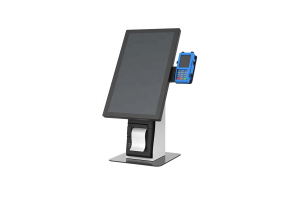
In the food and hospitality sector, kiosks act as virtual sales assistants. Customers can browse visual menus, explore upselling prompts (such as sides, drinks, or add-ons), and place orders directly to the kitchen without waiting for a server. This typically results in higher average order values (AOV) and drastically reduced wait times during peak trading hours.
3. Specialized Counter Sales and Delis
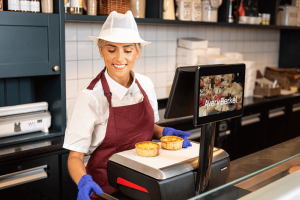
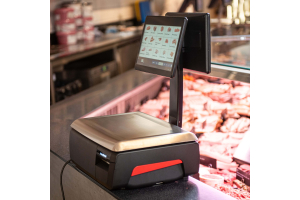
Businesses handling weighed goods—like butchers, farm shops, and delis—benefit enormously from integrated ecosystems. By combining self-service or counter-based Avery XTi/XTs scales with intuitive touchscreen POS systems, weighing, labeling, and payment processing flow together into a single, unified transaction.
Key Benefits of Integrating Self-Checkout Solutions
Implementing self-checkout kiosks goes far beyond simply keeping up with industry trends; it delivers measurable bottom-line improvements.
Maximizing Labor Efficiency
Labor shortages and rising wage costs remain a constant challenge. Kiosks do not replace your team; instead, they optimize your workforce. By offloading routine transactions to automated terminals, you can redeploy staff to high-value tasks such as customer service, merchandising, food preparation, and store security.
Comprehensive Ecosystem Integration
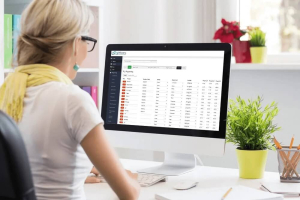
Standalone technology can create operational silos. That is why South West Systems provides solutions that integrate effortlessly with your broader infrastructure. Our self-service counter kiosks synchronize smoothly with SWS Quantum EPOS tills and cloud-based back-office systems, enabling you to:
-
Monitor real-time sales data across single or multiple sites.
-
Update product lines, pricing, and promotional labels instantaneously.
-
Generate detailed financial reports exportable to PDF, Excel, and CSV formats.
Best Practices for a Smooth Implementation
If you decide that self-checkout kiosks are right for your business, a strategic rollout is critical to ensure high adoption rates among your customers.
Designing an Intuitive User Journey
Your kiosk interface should be crystal clear, responsive, and easy to navigate for users of all technical skill levels. Clean typography, bright call-to-action buttons, and logical category layouts will keep transaction times low.
Strategic Floor Placement
Position your kiosks near the entrance or in dedicated express zones where foot traffic flows naturally. Ensure there is ample space for queuing without blocking main store aisles or traditional checkout desks.
Staff Training and Change Management
Even the most user-friendly kiosks require a transitional onboarding phase. Train your floor staff to act as "hosts" or guides during the first few weeks, encouraging hesitant customers to try the technology and demonstrating how simple it is to use.
Conclusion: Take Your Business Forward with South West Systems
Self-checkout kiosks represent a powerful opportunity to future-proof your business, lower operational costs, and deliver the fast, frictionless experience modern consumers demand. Whether you are looking to upgrade your existing retail counters, install specialized Avery label scales, or deploy an award-winning EPOS network, South West Systems has the expertise and hardware to support your growth.
Ready to explore how automation can transform your business? Get in touch with our expert team today for tailored advice and a competitive quotation.
-
Telephone: 01392 275324
-
Contact Email: sales@southwestsystemsuk.com
-
Website Contact Form: South West Systems Contact Page