UK
UK US
US EU
EU AUD
AUD Global

How to Choose a Restaurant Till System That Reduces Table Turnaround Times
In the high-stakes world of hospitality, profitability is entirely dictated by margin and velocity. For busy restaurants, bars, and gastro-pubs across the UK, the ultimate lever for boosting daily revenue isn't just increasing menu prices—it is optimizing table turnover. Simply put: the faster you can efficiently and gracefully seat, serve, clear, and bill a table, the more covers you achieve per service.
However, forcing velocity at the expense of guest experience is a recipe for poor reviews. The solution lies in the friction points of your service workflow, almost all of which pivot around your point-of-sale infrastructure. Choosing the right restaurant till system is no longer just an administrative choice; it is an active operational strategy to cut table turnaround times.
The Direct Link Between Modern EPOS Architecture and Table Velocity
In traditional setups, a server's journey involves massive physical friction: writing an order by hand, walking to a central stationary till terminal, waiting in line behind another server, punching in the order, and dealing with kitchen modifications. This legacy process introduces delayed ordering, human entry errors, and unnecessary floor miles.
A modern, integrated EPOS platform designed specifically for hospitality collapses these operational bottlenecks entirely. By introducing synchronized, real-time data flows between the floor, the bar, and the kitchen, every micro-moment of friction is designed out of the guest lifecycle.
Key Features of a Till System Designed to Minimize Table Turnaround Times
When auditing potential POS systems for your hospitality venue, certain core features are non-negotiable if your explicit goal is operational speed and optimization.
1. Mobile Handheld Ordering (Pay-at-Table Integration)
The single greatest generator of dead time in a restaurant is the multi-trip billing process: print the bill, walk it to the table, walk back to fetch the card machine, return to the table, process payment, and return to the till to finalize. Handheld mobile EPOS terminals allow servers to instantly send orders directly from the table side to the kitchen and take payments immediately when requested.
2. Intelligent Kitchen Display Systems (KDS)
Paper kitchen tickets get lost, stained, and cannot easily communicate priority. An advanced Kitchen Display System (KDS) integrates natively with your till system to automatically organize, prioritize, and time-stamp orders based on course logic. This ensures mains are not fired prematurely and appetizers arrive when fresh, standardizing production timelines and accelerating dish delivery.
3. Seamless Digital Table Mapping and Real-Time Statuses
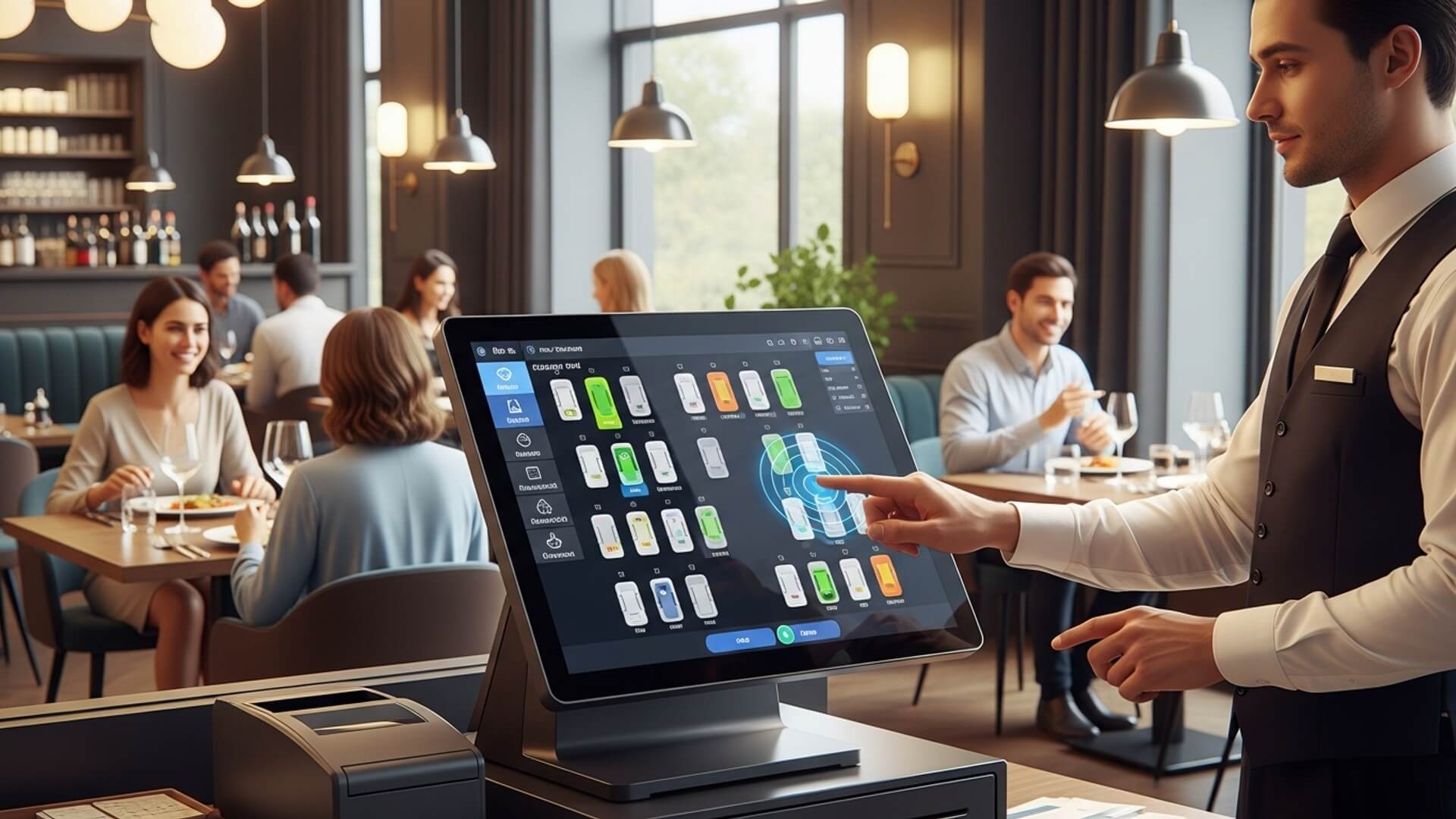
Hostesses and floor managers need instant visual data. Your till system should feature an interactive, color-coded table plan. At a glance, front-of-house staff must see which tables are waiting for drinks, which are on mains, which have requested their bill, and which are completely cleared and ready for the next seating. This prevents tables sitting empty due to communication gaps.
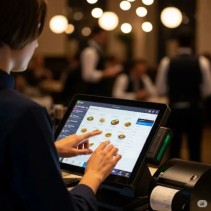
How to Choose the Right Restaurant Till System: A Procurement Blueprint
Selecting the ideal hardware and software mix requires a precise understanding of your specific service model. Use this step-by-step framework to evaluate your business requirements against market offerings.
Step 1: Evaluate Software Latency and UI Complexity
Every extra tap required to add a modifier (e.g., "medium rare", "sauce on side") costs seconds. Multiply those seconds by hundreds of orders per night, and you lose entire table rotations. Prioritize a software interface that features intuitive, fast-access layouts with automated modifier prompts that keep ordering fast and flawless.
Step 2: Verify Offline Resilience (Cloud-Hybrid Infrastructure)
Purely cloud-based till systems can leave your restaurant completely paralyzed if your internet connection drops or fluctuates during peak Friday night service. Ensure your POS provider utilizes a robust cloud-hybrid system. This structure means data caches locally on your network devices to maintain operational speed even if your internet completely fails.
Step 3: Analyze Split-Billing Capability
Few things slow down a service more than a large group asking to split a bill six ways at the end of a meal. If your till system makes splitting bills tedious or mathematically complex, your staff will spend ten minutes per table on administrative friction. Look for intuitive drag-and-drop split-billing functionalities that settle accounts in under sixty seconds.
Maximizing Your ROI with South West Systems
At South West Systems, we specialize in deploying elite, high-performance EPOS technology tailored explicitly to maximize operational efficiency and accelerate turnover across the hospitality sector. We don't just supply software; we engineer custom operational workflows that save your business time, eradicate errors, and maximize top-line revenue.
Upgrade Your Venue's Speed & Revenue Today
Ready to eliminate front-of-house friction and significantly lower your venue's table turnaround times? Contact our specialist team at South West Systems today for a tailored consultation and live system demonstration.
-
Telephone: 01392 275324
-
Email: info@southwestsystemsuk.com
-
Enquire Online: https://www.southwestsystemsuk.com/contact